What to See in Benidorm: Complete Local Guide
Benidorm makes much more sense once you stop looking only at the beach. Levante and Poniente are central to the city, of course, but between them sits a compact Old Town, while the surrounding area offers Mediterranean viewpoints, archaeological remains and coastal walks above the cliffs.
This guide covers the places genuinely worth seeing on a first visit. It is not a checklist designed to squeeze twenty stops into one day. The aim is to help you choose well and experience several different sides of Benidorm.
The best things to see in Benidorm
1. Benidorm Old Town
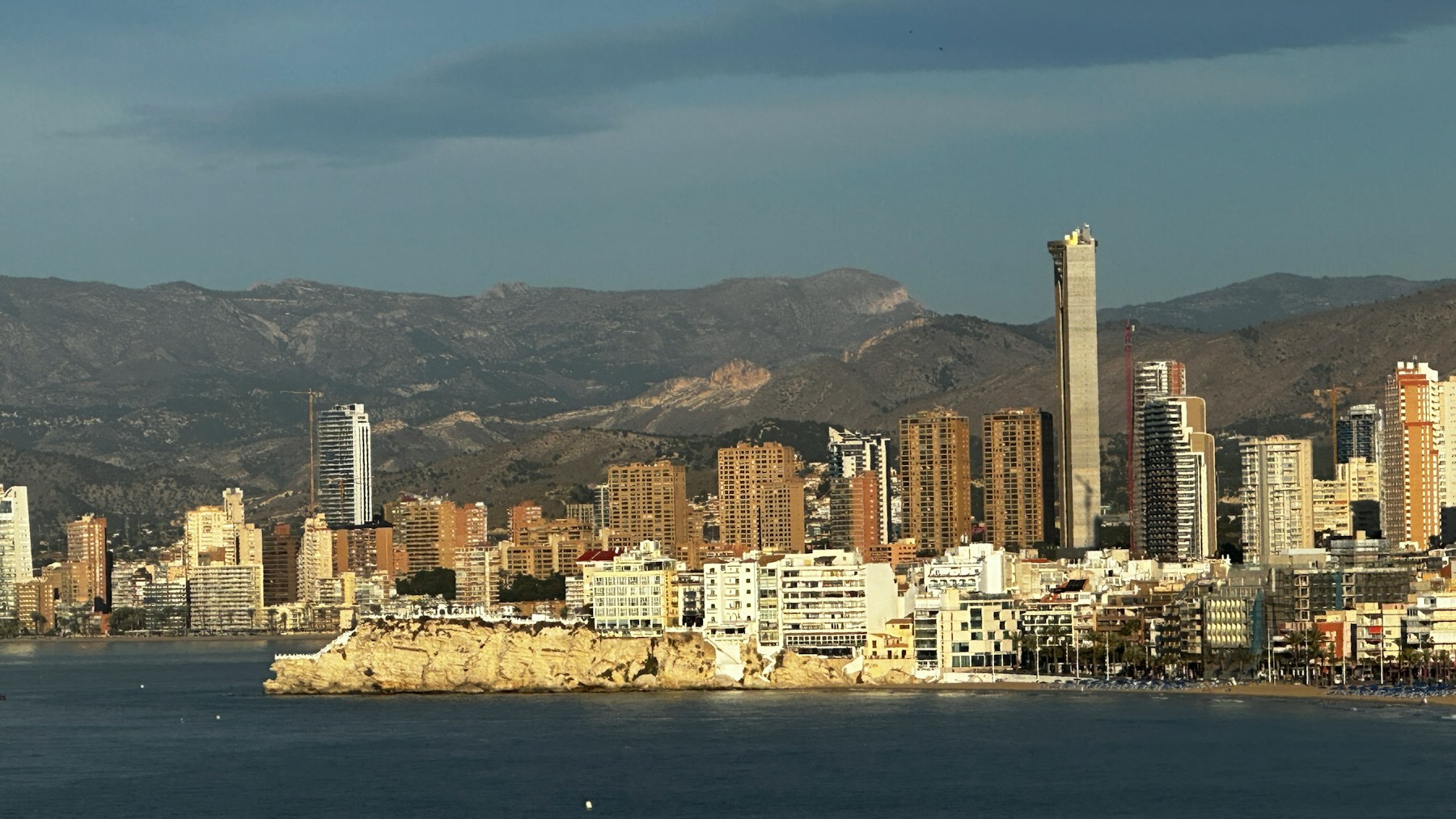
The Old Town occupies the headland separating Levante and Poniente beaches. It is compact and easy to explore on foot, with narrow streets, white houses, small squares, shops and a large concentration of bars and restaurants.
Its most recognisable route leads towards the Church of San Jaime and Santa Ana and Plaça del Castell. From here, you can descend towards the harbour, continue along Levante promenade or wander through the streets around the tapas area.
Visit early in the morning for a quieter atmosphere or return in the late afternoon when the streets become livelier. At midday and during the summer, this small area can feel crowded.
2. Balcón del Mediterráneo and Plaça del Castell
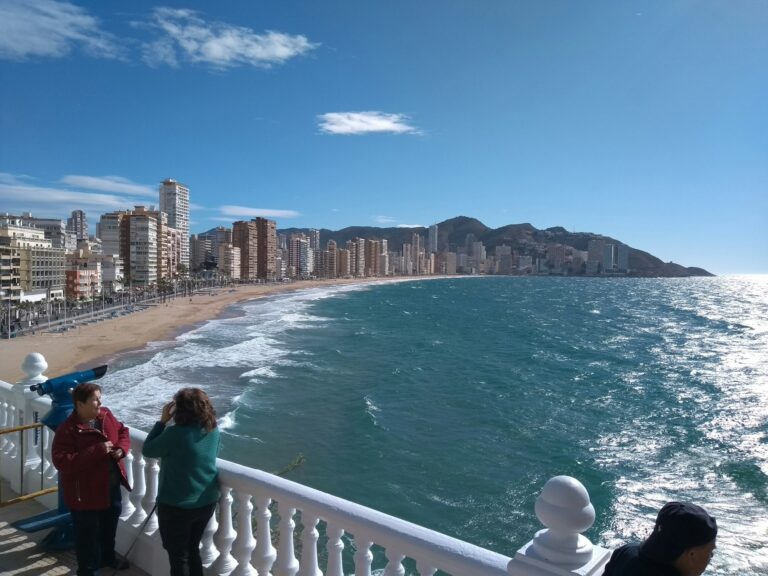
The Balcón del Mediterráneo is Benidorm’s classic postcard view. Its white balustrade projects above the sea on the site once occupied by the old castle. The viewpoint overlooks both main beaches and the coastline around the city.
It is free to visit and easy to reach from the centre. Sunrise is quieter, while sunset has more atmosphere but considerably more visitors. For photographs without a crowd, avoid arriving just before the sun goes down.
3. The Church of San Jaime and Santa Ana
Next to Plaça del Castell stands the Church of San Jaime and Santa Ana, easily recognised by its blue domes. It is one of Benidorm’s main historic buildings and a useful reminder that the town existed long before its high-rise skyline.
The church remains an active place of worship, so opening can vary and visitors should enter respectfully. Even if you only see it briefly, it belongs naturally in any walk through the Old Town.
4. Levante Beach
Levante is Benidorm’s liveliest and most internationally recognisable beach. Its promenade is lined with terraces, restaurants and accommodation, and it provides an immediate introduction to the resort’s energetic side.
It will not suit every traveller. In high season it can feel busy and noisy, particularly towards the Rincón de Loix end. Even if you prefer somewhere calmer, walking along the promenade is worthwhile for understanding the British and international face of Benidorm.
5. Poniente Beach
Poniente is longer and generally feels more relaxed. Its colourful, wave-shaped promenade is one of the most pleasant urban spaces in Benidorm for an evening walk.
It works especially well for families, quieter holidays and long walks beside the sea. The atmosphere changes along the beach: the farther you move from the centre, the more space you will usually find.
6. Mal Pas Cove
Between the harbour and the Old Town headland lies the small Mal Pas Cove. Its central location makes it convenient for a quick swim without leaving the historic area.
Its weakness is its size. It fills quickly in summer, so it is better for an early dip or a short stop than for spending an entire peak-season day.
7. Elche Park and the harbour
Elche Park sits between the Old Town and Poniente Beach. Its palm trees, harbour views and central position make it a comfortable place to stop before continuing along the coast.
From here you can walk beside the boats, continue west along Poniente or climb towards the Old Town and cross to Levante. It is a useful starting point for a simple self-guided route through central Benidorm.
8. Tossal de la Cala
At the western end of Poniente, Tossal de la Cala combines a high viewpoint with archaeological remains associated with the Roman presence in the area. Few places in Benidorm bring landscape and history together so effectively.
The final approach is steep but relatively short. Avoid the hottest part of the day and check current access arrangements before travelling, as opening conditions for the archaeological area can change.
9. The Benidorm Cross
High above the eastern side of the city, the Benidorm Cross provides one of the best panoramic views of the skyline. From here, Benidorm’s geography becomes clear: two broad beaches, the old headland between them and mountains enclosing the bay.
The route follows paved streets but includes a sustained climb. Take water, wear comfortable footwear and avoid midday during warmer months. Sunset is impressive, although walkers unfamiliar with the route should begin descending before it becomes dark.
10. Serra Gelada Natural Park
Serra Gelada reveals Benidorm’s natural side. The protected coastal landscape stretches between Benidorm, l’Alfàs del Pi and Altea, with cliffs and routes ranging from accessible walks to demanding hikes.
Do not confuse walking to the Cross with completing the full ridge. The longer route requires preparation, sufficient water, sun protection and an honest assessment of the temperature and your fitness. Check the latest notices from the Serra Gelada Natural Park before setting out.
11. Benidorm Island
The island visible from almost every part of the bay is an essential feature of the local landscape. Boat trips offer a closer look and, more importantly, a different view of Benidorm from the sea.
Services depend on sea conditions and the operator’s timetable. Before booking, check what the ticket includes and whether conditions are suitable. The island is a natural setting, so it should be approached as such rather than as a heavily packaged attraction.
12. L’Aigüera Park
L’Aigüera is a long green corridor running inland from the centre. Its open spaces and auditoriums host concerts and public events during the year.
It is not Benidorm’s most dramatic sight, but it offers a break from the seafront and helps visitors understand how the city extends beyond the two beaches.
What to prioritise for your type of trip
- First visit: the Old Town, Balcón del Mediterráneo, either Levante or Poniente and the Cross.
- Families: Poniente, Elche Park, the Old Town and one age-appropriate attraction.
- Couples: an Old Town walk, Mal Pas Cove and sunset from a viewpoint.
- Active travellers: Serra Gelada, the Cross walk and water activities when conditions allow.
- History: the Old Town, San Jaime Church, Tossal de la Cala and the harbour area.
A straightforward one-day route
Start in the morning on Poniente Beach and walk towards Elche Park. Climb into the Old Town, visit the church and Balcón del Mediterráneo, then descend towards Levante. Stop for lunch in the centre or around the tapas streets rather than choosing a restaurant solely because it has the largest picture menu.
In the afternoon, walk part of Levante promenade and finish either at the Cross or Tossal de la Cala, depending on where you are staying and how much effort you want. Trying to include both viewpoints in the same day adds transport and reduces the time available to enjoy them.
Practical local tips
- Central Benidorm is highly walkable, but the distance between the far ends of Levante and Poniente is greater than it appears.
- In summer, schedule climbs and exposed walks for early morning or late afternoon.
- You do not need a car to explore the Old Town and main beaches.
- Check prices and opening arrangements directly with each paid attraction before travelling.
- Leave some unplanned time: Benidorm is best understood by walking and noticing how quickly the atmosphere changes between neighbourhoods.
Frequently asked questions
How many days do you need in Benidorm?
One day is enough for the central essentials, but two or three days provide a far better pace and allow time for the beach, a walk or a day trip.
Can you visit Benidorm without a car?
Yes. The Old Town, central neighbourhoods and main beaches are walkable, with local public transport available for longer journeys.
Where is the best view of Benidorm?
Balcón del Mediterráneo gives you the classic, easily accessible view. The Cross provides a wider panorama of the skyline and bay but requires a significant uphill walk.
Which area is best for a first visit?
The Old Town area provides easy access to both beaches and the historic centre. Levante is livelier and more international; Poniente generally feels calmer.
Benidorm is not one single experience
Benidorm works best when it is not reduced to one stereotype. It can be lively, quiet, family-focused, nocturnal or surprisingly natural depending on the neighbourhood and time of day. A rewarding first visit should therefore combine three perspectives: the historic town on the headland, the beach city facing the Mediterranean and the skyline seen from above.