Where to Eat in Benidorm Without Tourist Traps
Eating well in Benidorm is easy once you know where to look and what to ask. The problem is not that every seafront restaurant is poor or that places serving tourists should be avoided. Problems begin when a restaurant is chosen only for its location, picture menu or an offer that does not clearly explain what is included.
Benidorm combines Valencian cooking, tapas bars, rice restaurants, seafood and decades of international food culture. This guide helps you choose by area and recognise a straightforward restaurant before sitting down.
Where to eat in Benidorm by area
Old Town: tapas and a sociable atmosphere
The Old Town has small bars, taverns and restaurants designed naturally around sharing food. The well-known tapas streets around Calle Santo Domingo—often referred to locally as the “Basque” area—work best when visiting several bars rather than committing to one long meal.
It is lively and popular with visitors, so “traditional” does not necessarily mean cheap. Before ordering, establish whether a tapa comes with the drink, is charged separately or forms part of a larger portion.
Best for: tapas, wine, couples and small groups.
Central back streets: variety without paying only for a view
A few streets behind the promenade, cafés, neighbourhood restaurants and menú del día venues compete more on food and value than on their sea view. This is often the most balanced area for an everyday lunch.
There is no exact boundary between “tourist” and “local” Benidorm. Walk slightly away from the busiest routes and read the complete menu rather than only the large board outside.
Best for: set lunches, Spanish food and mid-range budgets.
Poniente and La Cala: rice, fish and slower lunches
Poniente combines seafront restaurants with more residential venues. It suits an unhurried meal, particularly when looking for rice dishes, fish or Mediterranean cooking.
The view affects the price but should not be the only criterion. For rice, book ahead and ask about the price per person, minimum number of diners and approximate preparation time.
Best for: families, couples, rice dishes and long lunches.
Levante: convenience and international choice
Levante contains the greatest concentration of restaurants aimed at visitors. Spanish, Italian, Asian, Indian, British and quick-service food are all readily available. That variety is genuine and should not automatically be confused with poor quality.
Because competition and turnover are high, examine recent reviews, specialisation and prices. A venue claiming equal expertise in paella, pizza, kebabs, curry, fish and a full English breakfast deserves closer inspection.
Best for: mixed groups, extended serving hours and visitors staying around Levante.
Rincón de Loix: British and international food
Rincón de Loix is the place for full English breakfasts, Sunday roasts, pub food, steak houses and numerous international restaurants. If that is what you want, the area serves its purpose well; judging it for not resembling a Valencian tavern misses the point.
The useful distinction is between a venue specialising in a particular style of food and one where drink promotions dominate while the kitchen is secondary.
Best for: British visitors, substantial breakfasts, casual meals and flexible hours.
What to eat in Benidorm
Rice dishes
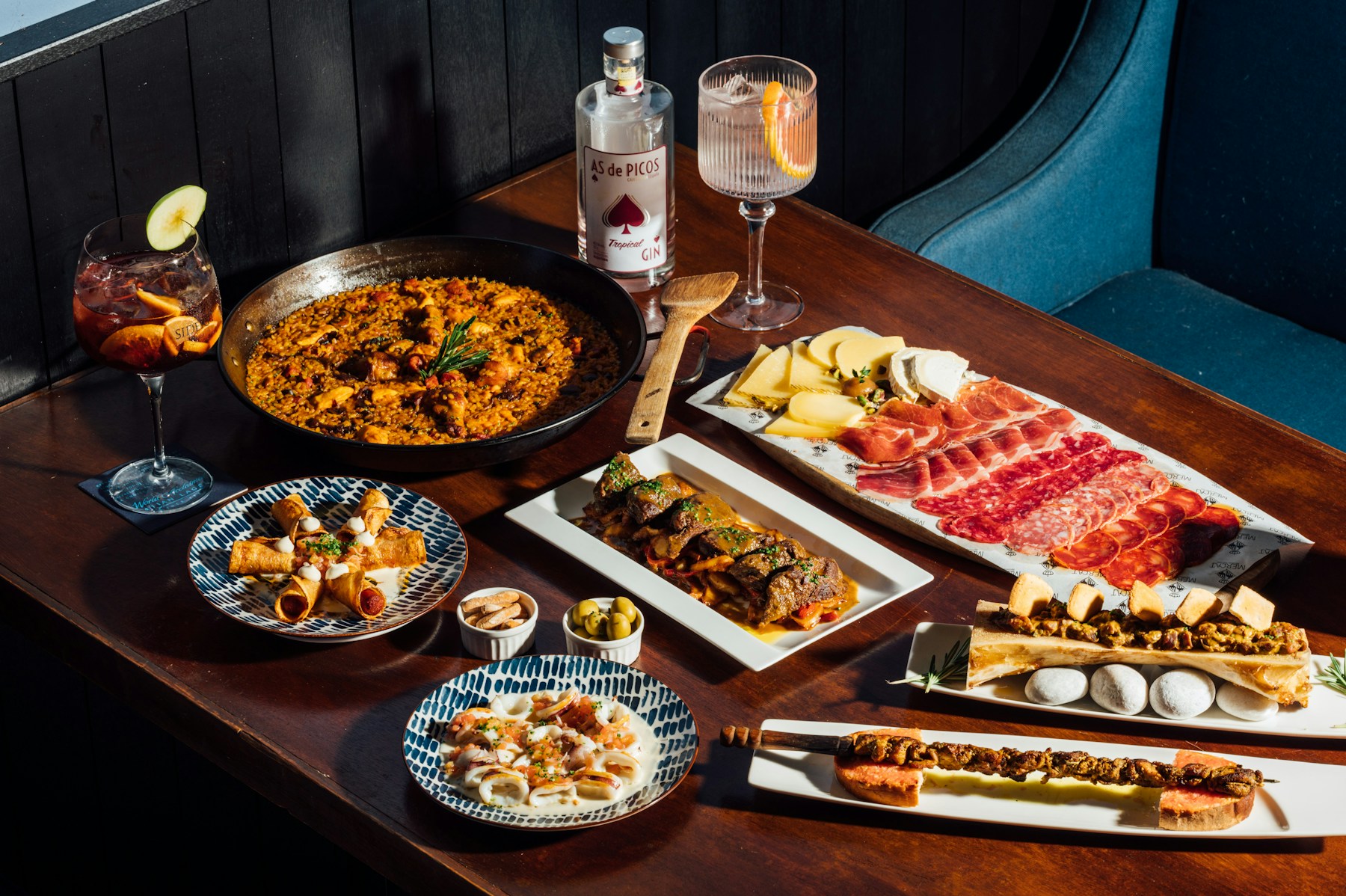
Alicante cooking extends far beyond generic “paella”. You may find arroz a banda, arroz del senyoret and rice prepared with seafood, fish, meat or vegetables, either dry or more broth-like.
Rice cooked to order takes time. Be cautious when every variety is promised immediately. Ask whether the price is per person, how many diners must order it and whether advance booking is needed.
Tapas and sharing plates
Tapas allow you to try several flavours, but they are not automatically cheap. Check the difference between a tapa, half portion and full portion. Start with fewer plates and add more after seeing the serving size.
Fish and seafood
Ask what the fish is, how it is priced and whether the price refers to a portion, whole item or weight. For anything offered verbally rather than listed, request the price before agreeing. That is sensible, not impolite.
International food
Benidorm has welcomed residents and visitors from abroad for decades. International food is part of its modern identity. A carefully prepared curry, British breakfast or pizza may be a more honest choice than supposedly “typical” food selected without care.
How to recognise a straightforward restaurant
- The menu displays complete prices and supplements clearly.
- Staff can explain what each dish includes.
- The menu has some coherence rather than attempting every cuisine.
- Recent reviews discuss food and service, not only the location.
- There is reasonable customer turnover and tables are properly cleaned.
- Daily specials are offered with a clear price.
- There is no aggressive pressure to enter or order quickly.
Signs that should make you stop and ask
None of these points proves that a restaurant is bad, but each justifies checking the conditions carefully:
- Large promotions with unclear quantities or supplements.
- An extremely long menu covering unrelated cuisines.
- Photographs replacing any meaningful dish description.
- Weight-based prices without an approximate item weight.
- Bread or appetisers placed on the table without saying whether they are charged.
- Excellent old reviews followed by a clear pattern of recent complaints.
- Street promoters who prevent you from reading the menu calmly.
The menú del día
A good Spanish set lunch can offer excellent value. Check whether it includes a drink, dessert or coffee, which choices carry a supplement and whether tax is included. The conditions should be clear before ordering.
On the seafront, a surprisingly cheap menu may recover the difference through drinks, supplements or simpler portions. That is not necessarily dishonest, but compare the final likely cost rather than the headline price.
Eating tapas without losing control of the bill
- Ask the price of tapas not shown on the menu.
- Begin with two or three plates and judge the portions.
- Decide whether drinks are shared or ordered as individual rounds.
- Remember that bread, sauces, coffees and spirits add up.
- Request an itemised bill if something does not match.
Ordering rice properly
- Reserve when possible.
- Choose the rice style in advance when dining as a group.
- Confirm the price per person and minimum order.
- Ask about starters to avoid ordering too much.
- Allow the kitchen proper preparation time.
A rice dish does not improve because the table is overloaded with starters. If it is the main course, let it remain the focus of the meal.
Opening hours and reservations
Kitchen hours are not always the same as the venue’s opening hours. Some restaurants serve for much of the day, while others keep Spanish lunch and dinner services and close the kitchen between them.
Reserve for rice, weekends, public holidays and groups. If you are running late, call the restaurant: holding an empty table indefinitely is difficult during peak season.
Allergies, intolerances and dietary requirements
Explain an allergy before ordering and ask about cross-contamination. Removing a visible ingredient is not enough. Restaurants should provide allergen information, but serious needs require a clear conversation with staff.
Vegetarian and vegan choice has improved, particularly in central Benidorm and Levante. Check stocks, sauces and side dishes because something described as vegetable-based may still contain animal products.
How much does eating out cost?
A simple breakfast may cost only a few euros; a menú del día normally falls into a moderate range; rice with starters and drinks costs more; and specialist or product-led restaurants can rise considerably above that.
Fixed figures age quickly. Compare current menus and include drinks, bread, dessert and supplements rather than looking only at the main course.
Tipping and checking the bill
Tipping is not compulsory in Spain and there is no required percentage. Leave something when you feel the service deserves it. Check the bill normally and ask about anything you do not recognise before paying.
Frequently asked questions
Where is the best area for tapas?
The Old Town contains the best-known tapas route, although good bars also exist on the surrounding back streets. The right choice depends on whether you prioritise atmosphere, ingredients, wine or price.
Should I avoid the seafront?
No. There are perfectly good and very good seafront restaurants. Simply recognise that part of the price pays for the location and assess the food as carefully as you would elsewhere.
Where should families eat?
Poniente and more residential areas often provide a comfortable atmosphere, larger terraces and a gentler pace. Reserve and ask about high chairs or children’s options when required.
Do restaurants require reservations?
For rice dishes, weekends, groups and highly demanded restaurants, booking is sensible. Informal tapas bars usually offer more flexibility.
Our standard
We are not searching for restaurants “without tourists”. Benidorm depends on tourism, and many excellent venues serve visitors every day. We look for places that treat customers clearly, cook a coherent menu and charge what they advertise. That is the real difference between a restaurant serving tourists and a tourist trap.